



Karim Badawi: The Minister Rewriting the Rules of Egypt’s Oil Industry
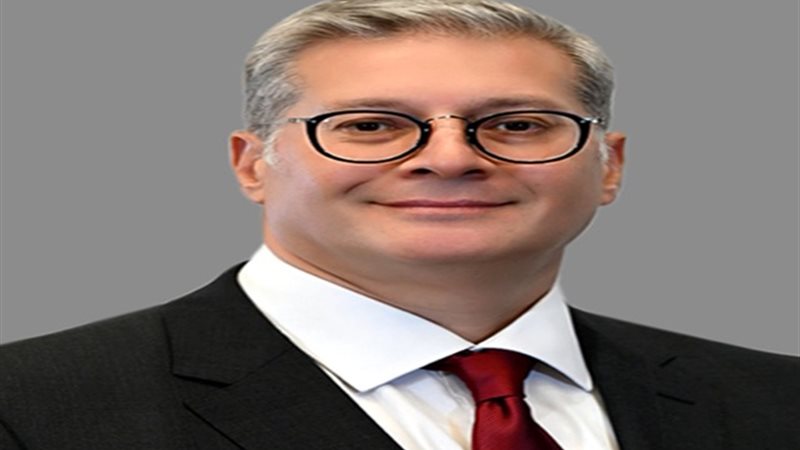
In a sector driven by billion-dollar decisions where politics intertwines with economics and outcomes are measured by numbers rather than impressions, traditional management norms are rarely broken. Petroleum ministries, by their nature, tend toward caution, operating from behind desks, where matters are managed through reports and meetings more than from production sites.
But what happens when an official attempts to redefine this equation?
In Egypt, Engineer Karim Badawi, Minister of Petroleum and Mineral Resources, presents a different model for leading a complex sector, one that combines intensive field presence with direct engagement with international partners, alongside efforts to push reform within an institutional environment known for its challenges.
During the Society of Petroleum Engineers (SPE) Egypt Student Chapters Conference, hosted by the American University, the presence of Engineer Karim Badawi was not merely a ceremonial appearance, but a conscious and direct message to a new generation, in which he instilled hope, affirming that Egypt’s petroleum industry still holds broad opportunities for a brighter future.
From the podium to the heart of the field, the minister moves quickly to the Western Desert, where the industry manifests in its true form, inspecting drilling rigs and even spending the night on one, staying close to the daily operational details. He then continues his tours across production sites before returning to Cairo to follow up on general assembly meetings and meet with partners and sector leaders, in a continuous cycle of work that does not pause.
In one such field scene, I saw him standing with passion, wearing coveralls, closely observing the unloading of a critical spare part necessary to complete the rig up of a regasification vessel, in a moment that reflects a real awareness of fine operational details directly linked to securing gas supplies and maintaining power supply stability.
In meeting rooms, you hear him setting the overall framework, outlining to all the six pillars that carry his vision for developing the sector. He follows his team as they step forward one after another to deliver messages, explain steps, and present results, reflecting a leadership style that knows how to build teams, manage systems, and transform vision into practical reality.
In another scene that goes beyond the boundaries of office, he stands beneath an aero plane receiving the body of a martyr, with a deeply human spirit and authentic Egyptian chivalry, before quickly returning to his responsibilities, moving between capitals and conferences, speaking with confidence and a clear vision to restore the global standing of the petroleum sector and rebuild bridges of trust, as a worthy representative of a long-established industry.
Two years of continuous effort between a drilling rig at sea and another in the desert, and between meeting rooms and decision making circles have shaped the features of a leadership that does not confine itself to managing from behind desks, but rather blends vision with field presence.
One begins to ask: what kind of school produced such a model? What culture shaped a mind that clearly sees its goal and knows how to reach it with calculated steps?
Is it innate talent? Or the quality of education and training that refined his tools? Or is it the disciplined professionalism he acquired through long years at Schlumberger, where no one endures unless they consistently exceed expectations?
Those who knew him during his years leading Schlumberger Egypt describe him as calm, humble, and close to everyone, attentive to both small and large details, and proactive, not waiting for direction as much as making a difference. Distinct in his style, he leaves his mark through action rather than noise, and through results rather than slogans. His initiatives were not incidental, but impactful, from supporting and developing the Egypt Upstream Gateway (EUG) to contributing to advancing seismic survey activities in the Gulf of Suez and the Red Sea, opening new horizons for exploration.
From his very first day leading the ministry, across both petroleum and mineral resources, he moved with a clear vision, a coherent methodology, and a defined action plan. At the forefront of challenges was one of the most complex files: settling the dues of international partners, which exceeded $6 billion, amid a severe foreign currency crisis, and restoring their confidence after many operations had stopped. The authority was even burdened with providing local liquidity to cover salaries and essential operational expenses.
Yet the surprise came in his ability to reverse the equation, settling dues, restoring confidence, and bringing operations back into motion. I often wondered: what kind of minister travels to knock on the doors of International Oil Companies (IOC), not to seek support, but to persuade them to work and maximize production? Then returns, confidently introducing one of the largest incentive packages to increase output, confronting complexity as if entering the most difficult challenges without hesitation.
With notable calm, he moved beyond traditional frameworks in awarding concession areas, allocating dozens of blocks within just two years, an unprecedented achievement. Egypt has witnessed many petroleum ministers, all distinguished and hardworking, but the mindset and spirit with which Karim Badawi operates remain different marked by innovation, openness to creativity, and an ability to turn challenges into opportunities.
The Mineral Resources sector has also witnessed notable developments in recent times, including steps toward restructuring and enhancing its economic character, such as moving toward transforming it into an economically oriented authority, alongside intensified efforts to promote its investment areas to global companies. These efforts reflect an attempt to unlock the potential of a sector widely viewed as a promising source for diversifying the national economy.
At the same time, refining and petrochemicals stand out as among the most important areas of value addition within the petroleum system, representing a fundamental pillar for maximizing returns from hydrocarbon resources. Despite progress made in this direction, the scale of opportunities in these sectors remains significant and warrants further detailed examination.
Perhaps context does not allow for listing everything that has been achieved; what is presented here is only a fraction of a much larger picture. Challenges remain between procedural complexities and accumulated bureaucracy that may slow progress or threaten some achievements. Yet he does not retreat; rather, he remains present in the details, leading with calmness and humility, driven by a clear belief in what he is doing.
The tools may not always match the ambition of this “strong horse,” and the heavy legacy may be a burden, yet hope remains pinned on such models capable of change those who possess will and vision. These are the torchbearers of responsibility, relied upon to sustain and advance the path of development.
There remains a firm belief that what lies ahead will be different, and that all must raise their ambitions to keep pace with this vision. Egypt possesses the fundamentals, the sector holds the opportunity, and the goal is not far: achieving energy self-sufficiency and strengthening Egypt’s position as a regional and global hub for oil and gas trade… when vision aligns with execution and will meets capability.
For now, the trajectory suggests an ongoing transition, one that seeks to balance immediate operational demands with longer-term structural reform, in a sector where change is often incremental, but increasingly necessary.